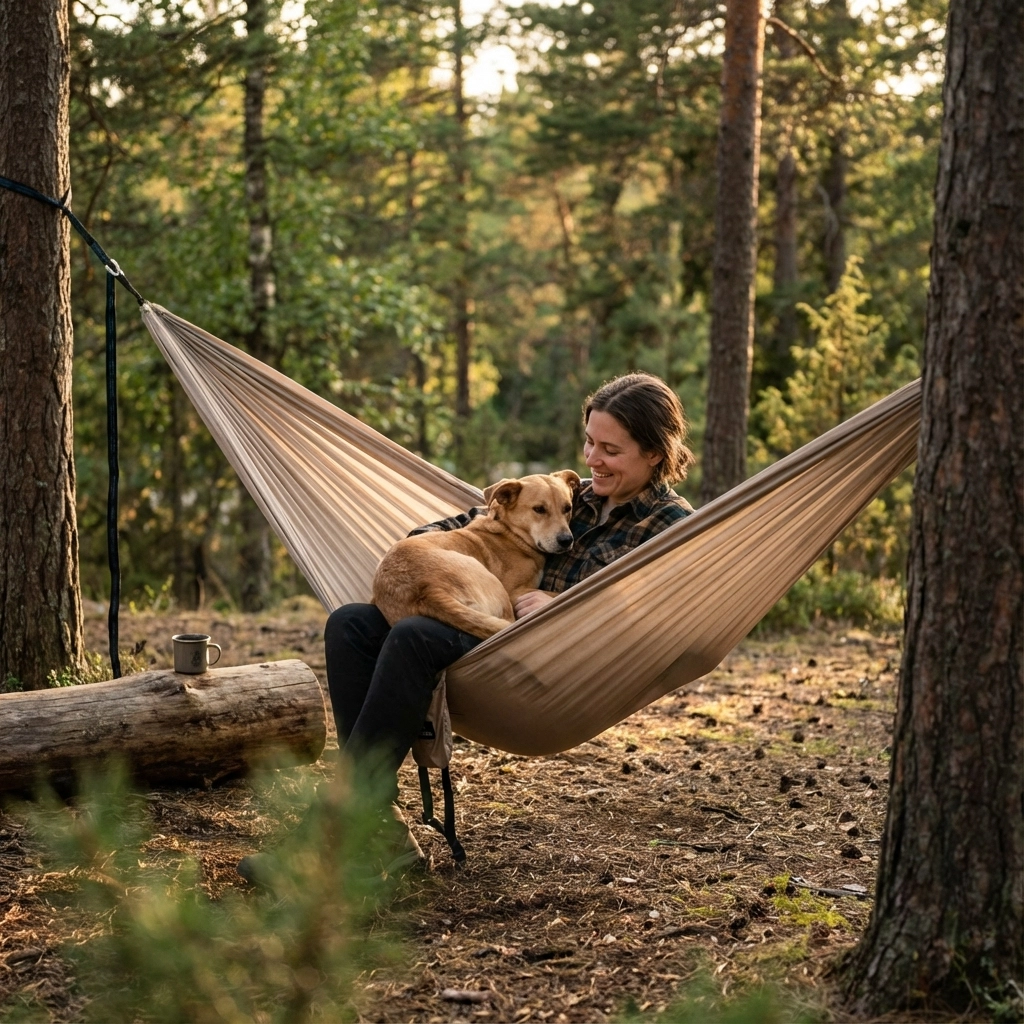
Picture this: you're suspended peacefully in your hammock, swaying gently between two towering pines, when you hear that familiar whine from below. Your furry camping buddy is looking up at you with those pleading eyes that say, "Hey, what about me?"
If you've been hammock camping for a while, you've probably faced this exact scenario. And if you're considering making the switch from tent camping to hammock life with your dog, you're likely wondering if those "dog-friendly" hammocks you've been seeing everywhere are actually worth the investment.
The short answer? It depends on your dog, your camping style, and your tolerance for a little trial and error. But let me share what I've learned from real campers who've tried this trend, because the truth is more nuanced than the marketing makes it seem.
The Reality Check: What Actually Works
Here's something the gear companies don't always tell you upfront: most dogs will happily snuggle up in a regular hammock with you. You don't necessarily need specialized "dog-friendly" gear to make this work. The key factors aren't about the hammock itself – they're about your dog's size, temperament, and sleeping habits.
I talked to Sarah, a weekend warrior from Colorado who camps with her 40-pound Border Collie mix. "Luna took to the hammock immediately," she told me. "But I quickly learned that my single hammock wasn't going to cut it. We upgraded to a double, and now it's her favorite way to camp."
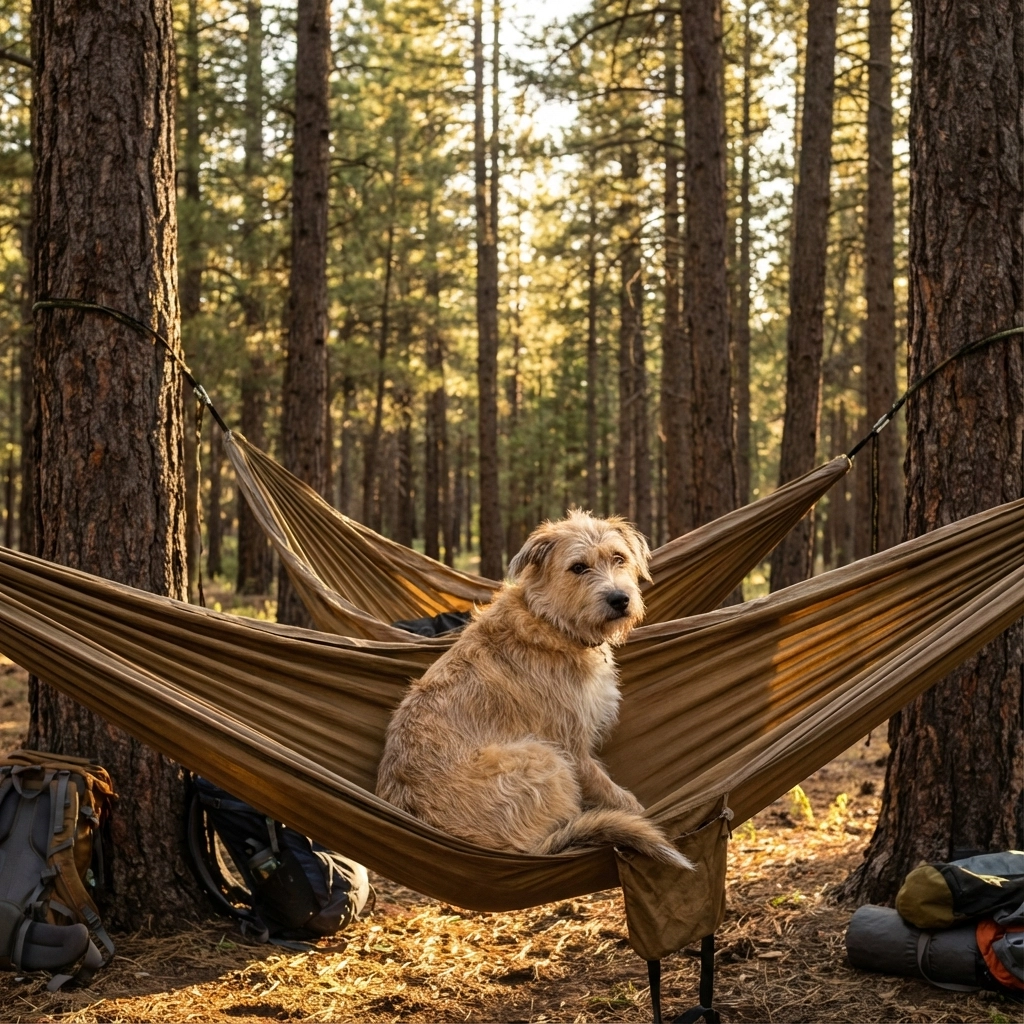
The size factor is huge here. Smaller dogs – think under 30 pounds – can comfortably share a single hammock with you. Larger dogs need the extra space of a double hammock, both for their comfort and yours. And if you're camping with a Great Dane or similar giant breed? Well, you might want to stick with ground-level sleeping arrangements.
The Durability Question Everyone's Asking
Let's talk about the elephant in the room – or should I say, the dog with claws in the hammock. Will your dog's nails destroy your gear?
The good news is that quality hammocks are surprisingly resilient. Parachute nylon with ripstop weave (like what you'll find in hammocks from Wise Owl Outfitters) is designed to prevent small punctures from becoming major tears. Canvas Brazilian-style hammocks made from cotton-polyester blends are equally tough. Even quilted fabric options hold up well against the occasional nail scrape.
But here's the real test: I followed up with Jake, who's been hammock camping with his 60-pound Lab mix for three seasons. "Rex has never been gentle with gear," he laughed. "But after dozens of nights in our canvas hammock, the only wear I can see is some slight fading from the sun. No punctures, no tears."
The key is investing in quality from the start. Those ultra-cheap hammocks you see online? Skip them if you're planning to share with your dog.
Training Your Dog for Hammock Life
Here's where things get interesting – and where most people don't think ahead. Your dog needs to learn hammock etiquette, especially if they're not naturally calm sleepers.
Start at home in your backyard. Set up your hammock low to the ground and practice getting in and out together. Most dogs figure out the gentle movements pretty quickly, but some need time to understand that sudden movements affect both of you.
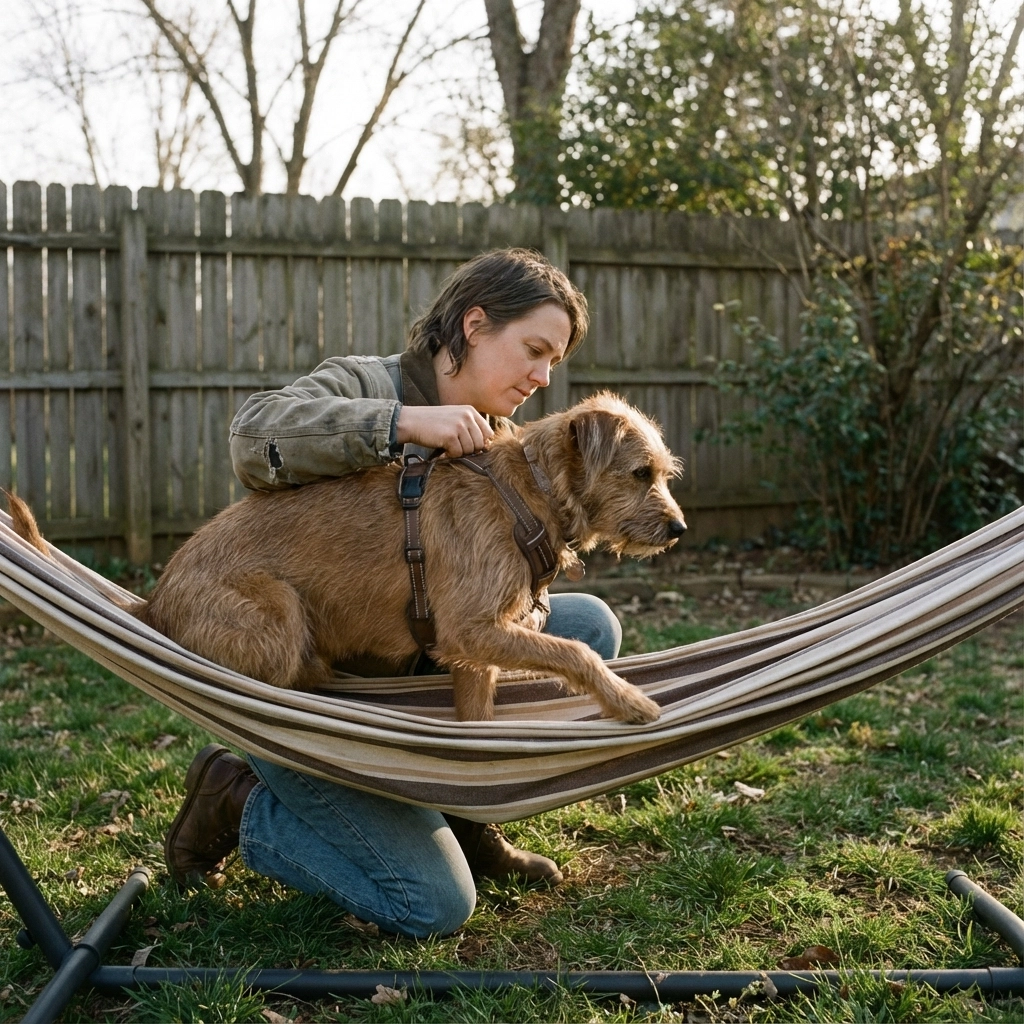
Mark from Oregon shared his approach: "We spent three evenings just hanging out in the hammock in our yard before our first trip. By the time we got to the campground, Bella knew the drill. She'd wait for me to settle in, then hop up and find her spot."
The training isn't just about the hammock itself – it's about the entire routine. Your dog needs to understand when it's hammock time versus ground time, and they need to be comfortable with the setup and takedown process.
What the Alternatives Look Like
Before you invest in hammock modifications or training, consider that some of the most satisfied campers I spoke with use simpler solutions altogether.
Tom, who camps with two Australian Shepherds, hangs pup tents from his hammock lines. "It keeps them close but gives them their own space," he explained. "And honestly, after a long day of hiking, they prefer having room to stretch out."
Others swear by sleeping pads or even just a poncho laid out underneath the hammock. The beauty of these approaches is flexibility – some nights your dog might want to snuggle up with you, other nights they'll prefer their own space on the ground.
The Weather Factor Nobody Talks About
Here's something that surprised me in my research: weather plays a bigger role in hammock success with dogs than most people anticipate.
During a recent camping trip in the Pacific Northwest, I met Lisa and her Golden Retriever, Murphy. "We love our hammock setup in good weather," she told me. "But when it's raining hard or really windy, Murphy gets anxious being suspended. Those nights, we're grateful we brought backup ground gear."
The enclosed hammock tents (like the SkyNest models) can help with weather protection, but they also add complexity to your setup and limit space for you and your dog.
The Honest Cost-Benefit Analysis
So let's get down to brass tacks – are dog-friendly hammocks worth the investment?
If you're already committed to hammock camping and have a smaller, well-behaved dog, absolutely. The convenience of keeping your buddy close while you sleep is worth the learning curve and initial investment in quality gear.
For larger dogs or those new to camping altogether, I'd suggest starting with simpler solutions. Try a regular quality hammock with ground alternatives for your dog. See how they adapt before investing in specialized gear.
The sweet spot seems to be medium-sized dogs (30-60 pounds) who are already comfortable with camping routines. They're big enough to appreciate the elevation and comfort, but not so large that space becomes a constant issue.
Making It Work for Your Pack
If you decide to move forward with hammock camping, here are the non-negotiables I've learned from successful dog hammock campers:
Choose machine-washable options when possible – trust me, your gear will need regular cleaning. Set up close to the ground for easy access and emergency exits. Always bring backup ground sleeping options for those nights when the hammock just isn't working.
Position water bowls nearby and pack extra blankets for temperature regulation. Dogs can get cold faster in hammocks since they're elevated and exposed to more air movement.
The Bottom Line
Dog-friendly hammocks aren't just a marketing gimmick – they can genuinely enhance your camping experience if your situation is right for them. But they're not a magic solution for every dog or every camping style.
The most successful hammock-camping dog owners I've met started with realistic expectations and prepared for flexibility. They invested in quality gear, took time to train their dogs, and always had backup plans.
Your camping adventures with your best friend don't have to be limited by sleeping arrangements. Whether you end up swaying together in a hammock or sleeping side by side on the ground, the memories you're making are what really matter.
What's worked best for your camping setup? Every dog and owner combination is different, and there's no single right answer – just the right answer for you and your four-legged adventure buddy.