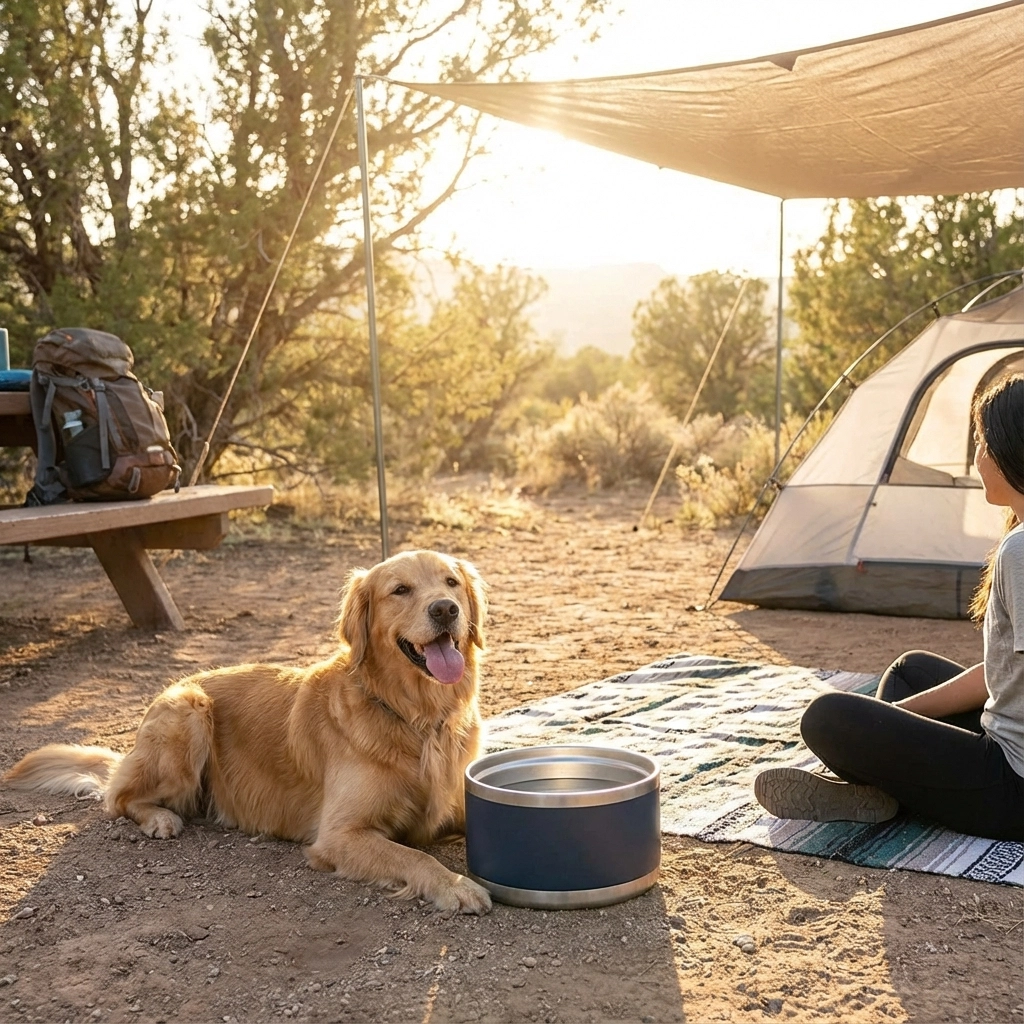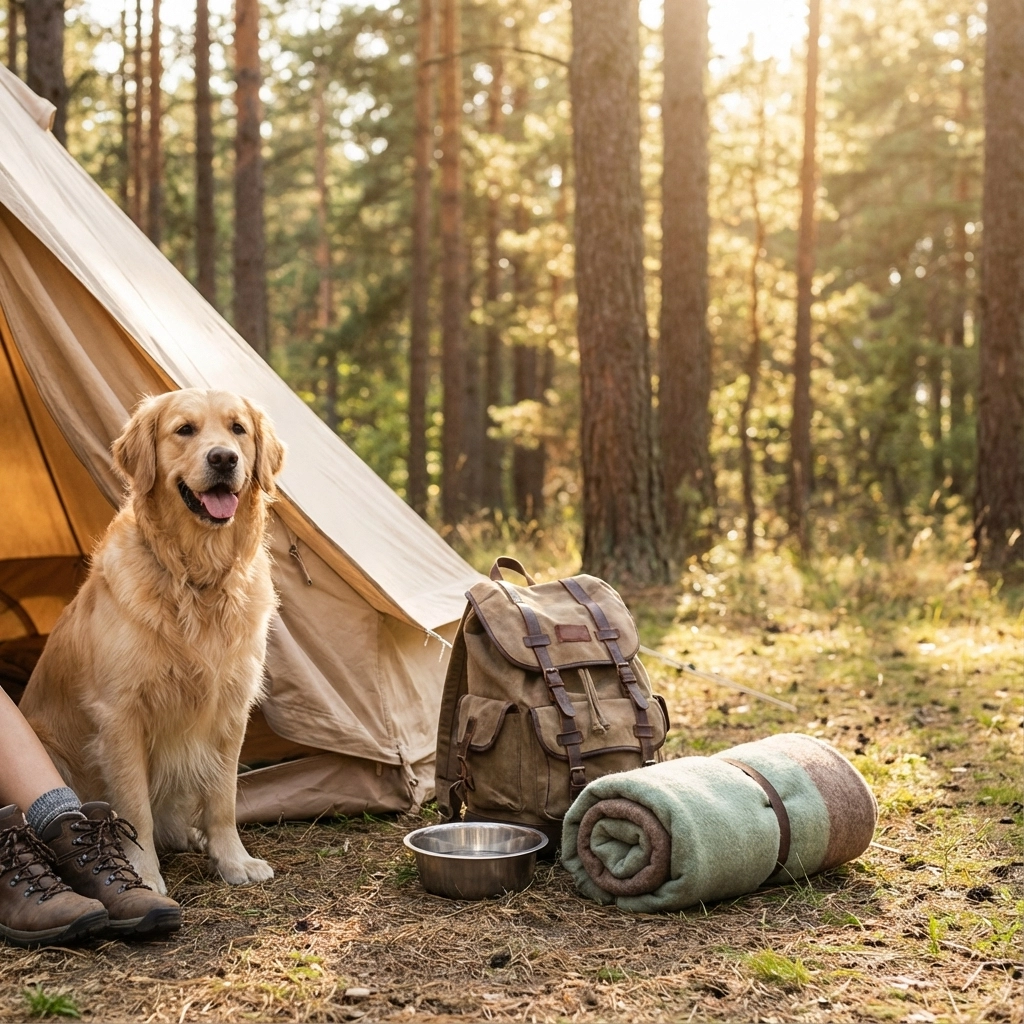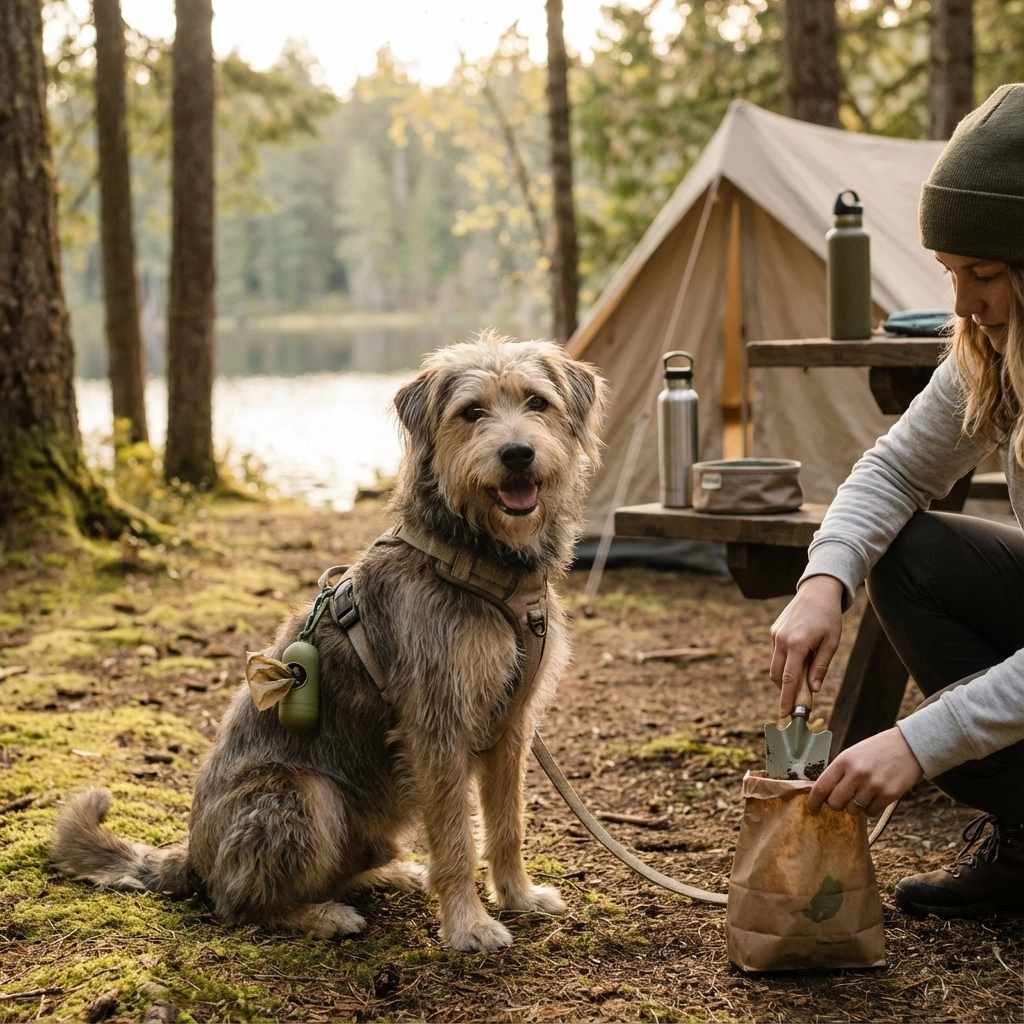
There's nothing quite like watching your furry best friend discover the great outdoors for the first time – that tail-wagging excitement when they catch their first whiff of pine trees or the pure joy on their face as they splash through a mountain stream. But as much as we love sharing these adventures with our four-legged companions, we also want to make sure we're protecting these beautiful spaces for future generations of hikers (both human and canine).
The good news? You don't have to choose between bringing your pup along and being an eco-conscious camper. With a few simple strategies, you can minimize your environmental pawprint while still having an amazing time ruffing it with your dog.
1. Master the Art of Waste Management
Let's start with the obvious one – nobody likes talking about poop, but it's the foundation of responsible dog camping. Always pack out your dog's waste, no matter where you're camping. Dog waste isn't just unpleasant; it can seriously contaminate water sources and introduce harmful bacteria and parasites into pristine ecosystems.
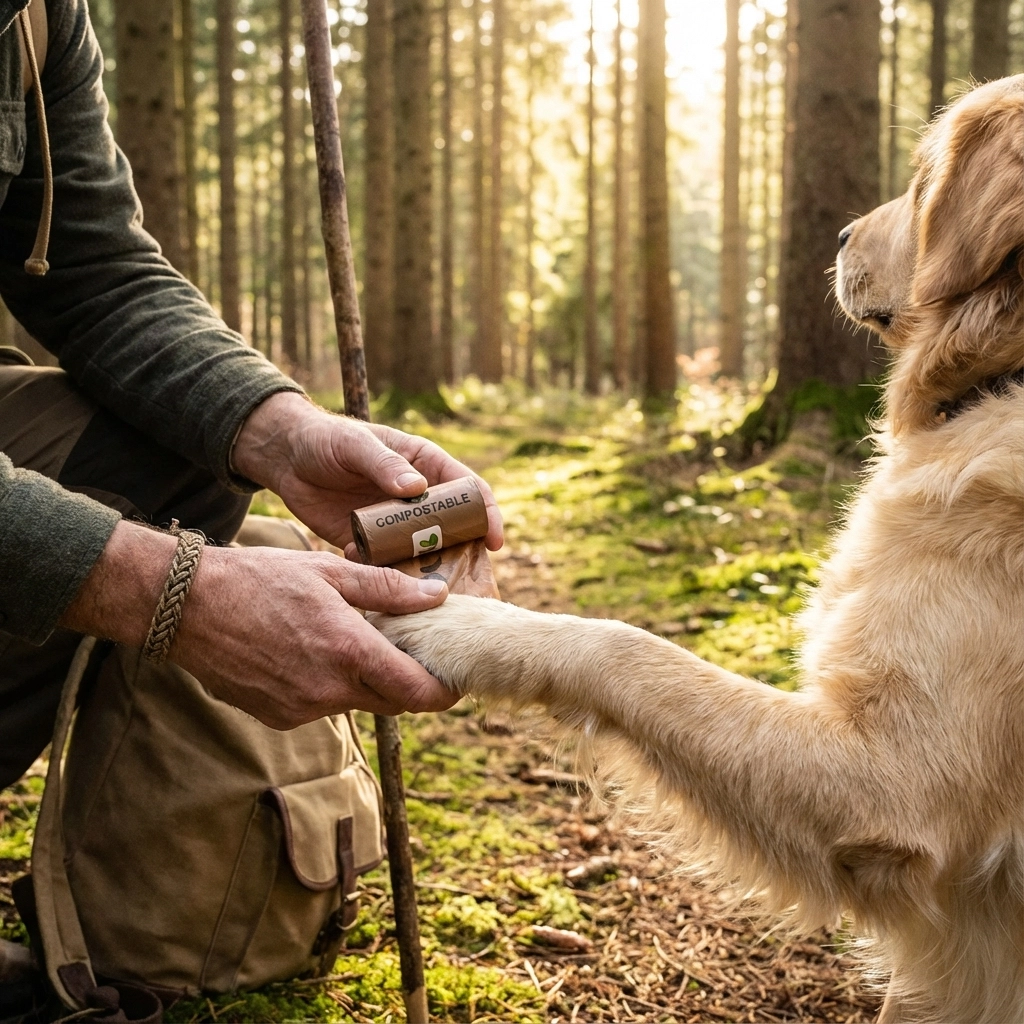
Invest in high-quality, biodegradable waste bags that won't tear when you need them most. Pack more than you think you'll need – trust me on this one! If you're in remote backcountry areas far from trails, you can bury waste similar to human waste protocols, but always pack it out when you're within a few kilometers of trailheads or popular camping spots.
Pro tip: Bring a small, dedicated waste bag dispenser that clips to your pack or belt loop. You'll thank yourself when nature calls and you're not fumbling through your entire backpack.
2. Control Your Dog's Dining Experience
Here's something many campers don't think about: leaving dog food out attracts wildlife to your campsite. Those cute chipmunks and curious bears don't know the difference between kibble and human food – they just see an easy meal.
Only bring out your dog's food during designated meal times, and store it in your car or bear-proof containers between meals. If your pup is a grazer who likes to eat throughout the day, use a collapsible bowl with a lid that you can close and stash away quickly.
Pack appropriately sized portions rather than bringing the entire bag of kibble. Not only does this reduce waste, but it also lightens your load – and trust me, every ounce counts when you're hiking with camping gear AND dog supplies.
3. Provide Sustainable Hydration Solutions
Your adventure buddy needs plenty of water, especially during physical activities like hiking and exploring. Bring multiple portable, collapsible water bowls – they're lightweight, packable, and prevent your dog from drinking directly from potentially contaminated natural water sources.
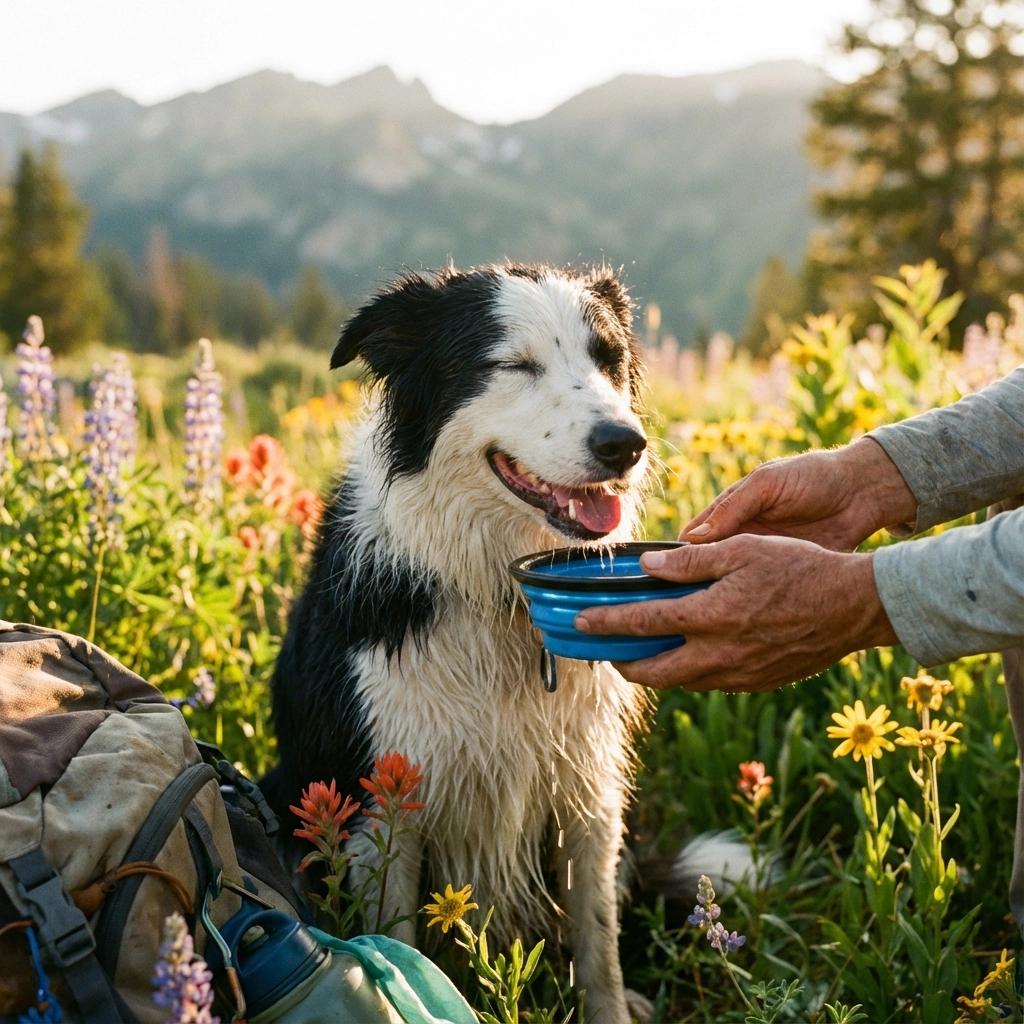
Look for bowls made from BPA-free silicone or recycled materials. These eco-friendly options are just as functional as traditional plastic but have a much smaller environmental impact. Plus, they're usually more durable and easier to clean.
Always carry enough fresh water for your dog, and resist the temptation to let them drink from streams or lakes. What looks pristine might harbor harmful bacteria or parasites that could make your pup seriously sick.
4. Choose Gear That Gives Back to Nature
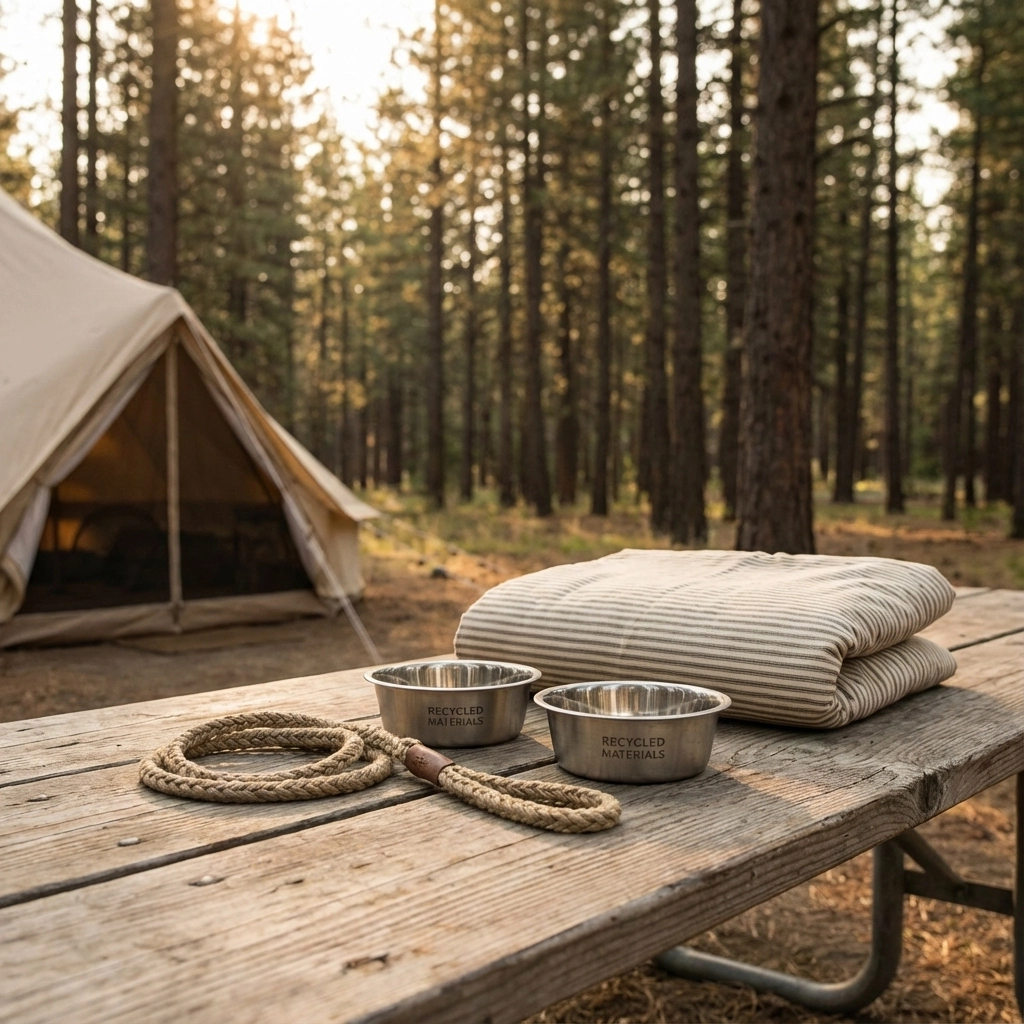
When selecting camping gear for your dog, opt for products made from sustainable materials whenever possible. Collapsible food and water bowls made from recycled materials, leashes crafted from hemp or recycled plastic, and beds made from organic cotton all help reduce your environmental pawprint.
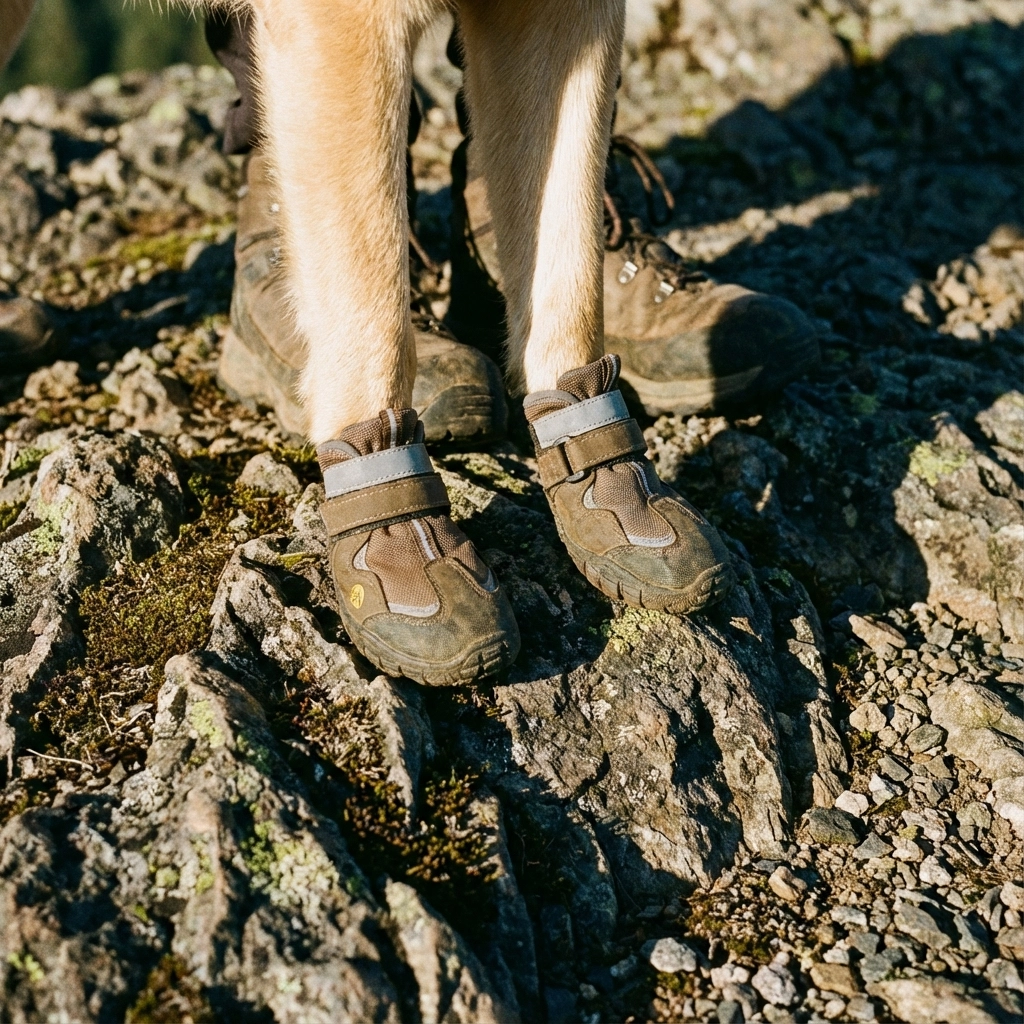
Dog booties might seem like overkill, but they're actually fantastic for protecting sensitive terrain from your pup's claws while keeping their paws safe from rough rocks and hot surfaces. Look for booties made from natural rubber or recycled materials.
5. Respect Leash Laws and Trail Etiquette
Even if your dog has perfect recall at home, keep them on a leash when camping rules require it. This isn't just about following regulations – it's about protecting wildlife, preventing soil erosion, and preserving delicate vegetation.
Leashes also prevent your dog from disturbing other campers who might not be as comfortable around dogs as you are. A six-foot leash is usually perfect for most camping situations, giving your pup room to explore while keeping them under control.
Some areas have specific leash length requirements, so research the rules before you go. Being a responsible dog owner helps ensure these beautiful spaces remain open to our four-legged friends.
6. Minimize Ground Disturbance
Dogs love to dig – it's in their nature! But all that scratching and digging can damage fragile ecosystems and increase erosion. Discourage excessive digging by bringing along some of your pup's favorite toys to keep them occupied.
If your dog does dig a small hole, fill it back in before you leave. The goal is to leave no trace that you and your furry friend were ever there.
Consider bringing a small tarp or blanket for your dog to lie on instead of letting them create a dirt bed. This protects the ground and gives your pup a clean, comfortable place to rest.
7. Practice Strict Food Storage Protocols
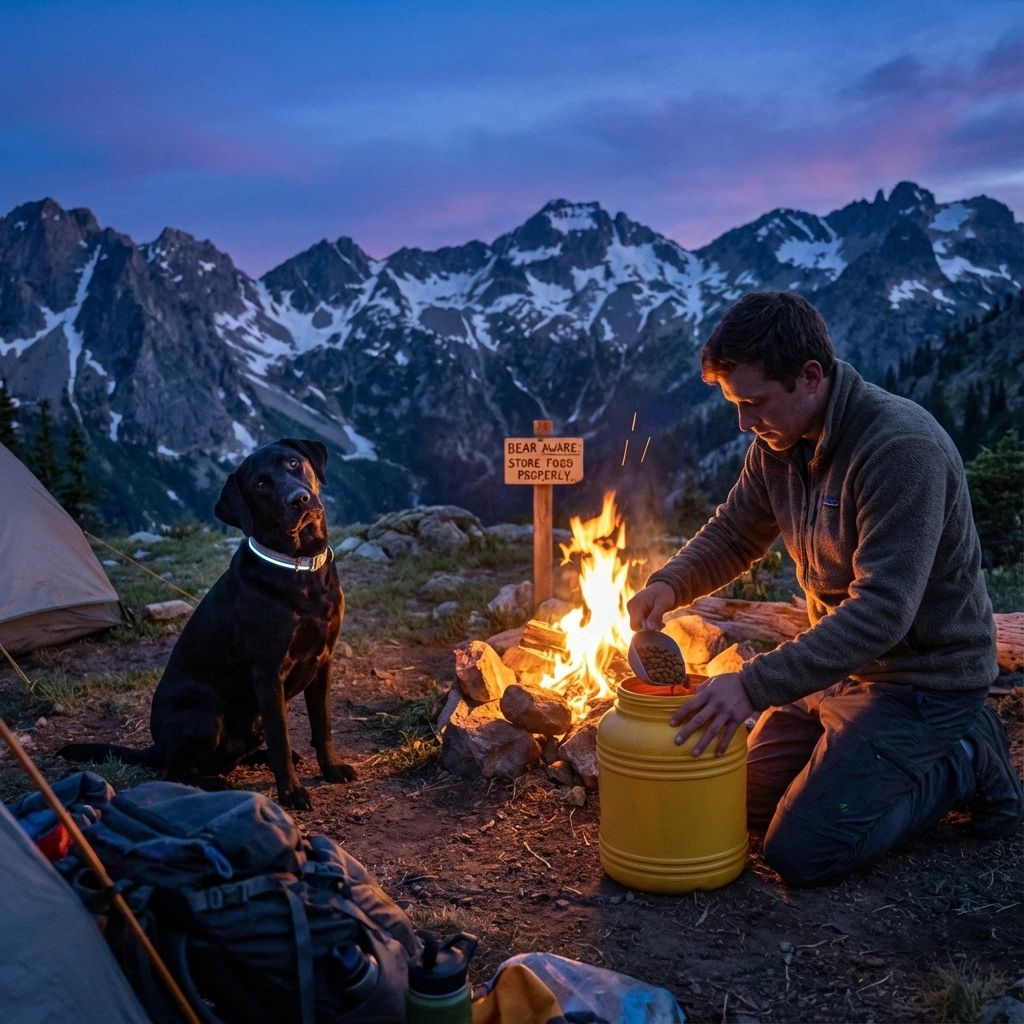
Just like with human food, all dog food and treats need to be stored properly to avoid attracting wildlife. Use bear-proof containers or hang food in bear canisters at least 12 feet high and 6 feet from tree trunks.
Never leave any food scraps or spilled kibble around your campsite. Even tiny bits can attract animals and teach them that campsites are reliable food sources. This creates dangerous situations for both wildlife and future campers.
Pack treats in reusable containers rather than bringing original packaging that might tear or create unnecessary waste.
8. Supervise All Activities
Keep your dog under direct supervision while they're eating, drinking, and exploring. This prevents them from wandering into sensitive areas, consuming things they shouldn't, or disturbing wildlife.
Supervised dogs are also less likely to bark excessively or behave in ways that might disturb other campers seeking peaceful nature experiences. Remember, you're an ambassador for all dog owners – your behavior influences whether these spaces remain dog-friendly.
9. Pack Out Everything You Pack In
This classic leave-no-trace principle applies to all your dog's supplies too. Every food wrapper, waste bag, toy, blanket, and piece of gear that comes with you should leave with you.
Create a packing checklist that includes all your dog's items so you don't accidentally leave anything behind. It's easy to forget a tennis ball or water bowl when you're breaking down camp, especially if your pup has scattered their toys around the campsite.
Consider bringing a dedicated bag for all your dog's gear to make packing up easier and ensure nothing gets left behind.
10. Be a Considerate Camping Neighbor
Your dog might be the friendliest pup in the world, but not everyone loves dogs or wants to interact with them. Keep your dog from approaching other campers uninvited, and always ask before letting kids pet your dog.
Control barking, especially during quiet hours. Some dogs get excited or anxious in new environments, so bring familiar toys and comfort items to help them settle down. If your dog is prone to nighttime anxiety, consider practicing camping in your backyard first.
Clean up any muddy paw prints or dog hair from shared facilities like restrooms or picnic tables. These small considerations help maintain positive relationships between dog owners and other outdoor enthusiasts.
Making It All Work Together
The beauty of eco-friendly dog camping is that most of these practices just require a little extra planning and mindfulness – not expensive gear or complicated procedures. Start with the basics like waste management and proper food storage, then gradually incorporate more sustainable practices as you become a more experienced dog camper.
Remember, every positive camping experience you have with your dog helps prove that responsible pet owners deserve access to these incredible outdoor spaces. By following leave-no-trace principles, you're not just protecting the environment – you're helping ensure that future generations of dogs and their humans can enjoy these adventures together.
The trails are calling, and your four-legged adventure buddy is ready to answer! With these simple strategies in your pack, you can explore with confidence knowing you're leaving only paw prints and taking only memories.